

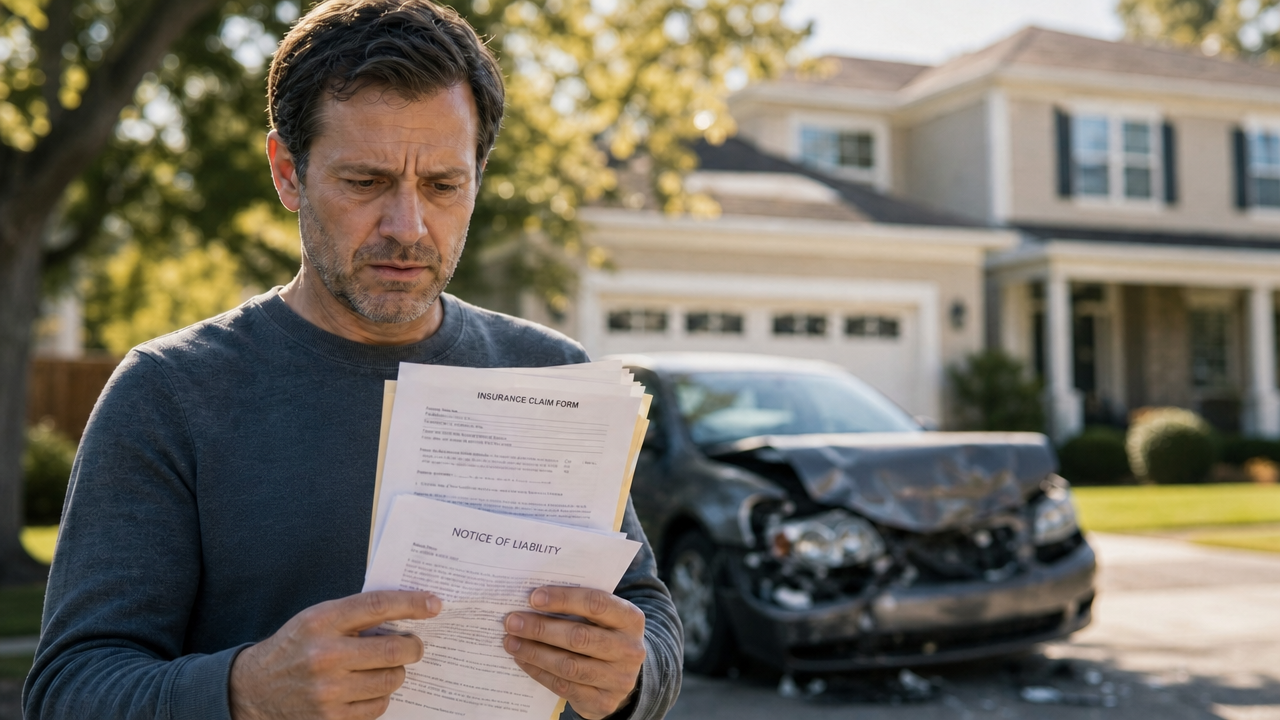
When learning to drive, parents often warn their children to be careful, cautioning that if they cause an accident and are found at fault, the family could lose their home. While that fear may sound extreme, it reflects a very real concern about financial responsibility. Causing an accident is stressful enough. But if the crash results in serious injuries or extensive property damage, you may start worrying about more than just higher insurance premiums. One of the most common and frightening questions people ask is: Can I lose my house after an at-fault car accident?
Being an at-fault driver in an accident means you are legally responsible for the damages caused to the other party.
The short answer is yes, it is possible, but it is relatively rare. Understanding what a car accident means in this context is important: if you are found at fault, you could be held legally and financially responsible for injuries and property damage. Losing your home typically only becomes a risk in situations where damages exceed your insurance coverage, a lawsuit results in a large judgment against you, and you have significant unprotected equity in your property. This is why having adequate car insurance is crucial; it is the first line of defense against financial liability from car accidents, protecting your assets and acting as an intermediary between you and the person you struck. Asset protection concerns are real, and proactive planning with sufficient insurance can help safeguard your home and financial stability. Understanding how this process works can help you better protect yourself and your assets.
Introduction to Car Accident Consequences
Being involved in a car accident can have far-reaching consequences that extend well beyond the initial shock and physical injuries. For those found at fault in a car accident, the aftermath can include not only medical bills and emotional distress but also significant financial liability. One of the most pressing concerns is whether you could lose your house due to the costs associated with an at-fault car accident.
Understanding the legal process and the role of insurance coverage is essential for anyone facing this situation. Without adequate coverage, you may find your personal assets, including your home, are at risk if damages exceed your policy limits. This is why asset protection strategies, such as increasing your liability limits or securing an umbrella insurance policy, are so important. Navigating the aftermath of a fault car accident requires a clear understanding of your financial liability and the steps you can take to protect your home and other assets. By being proactive and ensuring you have adequate insurance, you can reduce the risk of losing your house due to a car accident and safeguard your personal finances.
How Liability Works After an At-Fault Accident
Understanding liability is crucial when considering the risks associated with at-fault car accidents. When you are found at fault for a car accident, you are legally responsible for the damages you caused. These damages can include:
- Medical bills
- Lost wages
- Pain and suffering
- Property damage
- Long-term care costs in severe injury cases
The injured party has the right to seek compensation from you for losses such as medical bills and vehicle property damage.
Fortunately, most drivers carry auto liability insurance, which is designed to cover these costs up to the limits of the policy. For example, you may have coverage limits such as:
- $50,000 for bodily injury per person
- $100,000 for bodily injury per accident
- $25,000 for property damage
If the total damages fall within those limits, your insurance company typically pays the claim. In that case, your personal assets, including your home, are not at risk in an at-fault car accident.
The problem arises when the damages exceed your policy limits. In the claims process, the injured party will notify your insurance and submit documentation of their losses. If the claim cannot be resolved through insurance negotiations, the injured party may file a car accident lawsuit against you to seek compensation. If the court awards damages that exceed your coverage, you are personally liable for the difference, and your personal assets can be seized to satisfy the judgment.
When Insurance Isn’t Enough
Serious accidents involving catastrophic injuries or fatalities can result in damages that quickly surpass standard insurance coverage. In a catastrophic car accident, damages can easily exceed standard policy limits, creating insurance gaps that leave your personal assets exposed. For example, imagine you carry $100,000 in bodily injury coverage, but the injured party’s medical bills, lost income, and pain and suffering total $500,000. If the accident exceeds your policy’s coverage, your insurer would pay up to your policy limit, but you could be personally responsible for the remaining $400,000.
If you cannot settle for the remaining amount, the injured party may file a lawsuit against you. If they win and receive a judgment for damages beyond your insurance coverage, they may attempt to collect from your personal assets. This is a real risk if insurance claims and settlements do not cover the damages, and you could lose your house due to a court judgment. If the damages from the accident surpass your insurance limits, the injured party can come after your personal assets to cover the difference, including your home. A court judgment can attach to your real property, and in certain situations, the court might order your home to be sold to satisfy the judgment. Additionally, a creditor can place a lien on your home if you are personally liable for damages due to low insurance limits.
That is where your home could potentially become vulnerable.
Can Someone Force the Sale of My House?
In certain circumstances, possibly.
If a court enters a judgment against you, the injured party can pursue collection efforts. These may include:
- Garnishing your wages
- Levying your bank accounts
- Placing liens on your property
A lien is a legal claim against your property. If a lien is placed on your house, you generally cannot sell or refinance it without paying off the judgment. A lien can attach to your home’s equity, and if the equity in your home exceeds your state’s homestead exemption, a court could theoretically force the sale to pay a judgment. In many states, these exemptions protect your primary residence from being sold.
Homestead exemptions protect a portion of your home’s equity from creditors and lawsuits, depending on state laws. For example, states like Louisiana may provide only a limited homestead exemption, covering a small amount of equity and leaving the rest vulnerable, while states like Texas and Florida offer high or even unlimited protection for primary residences under homestead exemptions. Homestead protections typically do not apply to vacation homes or rental properties, making them more vulnerable to asset seizure.
Homestead Exemptions: Protecting Your Primary Residence
Many states have what are known as homestead exemptions. These laws protect a certain amount of equity in your primary residence from creditors.
For example, if your state has a $75,000 homestead exemption and you have $60,000 in equity in your home, your house may be fully protected from forced sale. If you have $200,000 in equity, only the amount exceeding the exemption may be exposed.
These laws vary significantly by state. Some states offer modest protections, while others provide very generous safeguards for homeowners. The level of protection available can make a substantial difference in whether your home is realistically at risk.
It is important to note that homestead protections typically apply only to your primary residence, not vacation homes or investment properties.
The Legal Process and Asset Protection
After a car accident, the legal process can quickly become complicated, especially if you are determined to be at fault. As the at-fault party, you may be held responsible for damages, including medical expenses, lost wages, and property damage suffered by the injured party. If the injured party decides to file a car accident lawsuit, your personal assets may be at risk if your liability insurance does not fully cover the damages.
Liability insurance is designed to shield you, but standard policies may not always provide enough protection in the event of an accident. When your coverage is exceeded, asset protection strategies become crucial. Options like an umbrella policy can provide extra liability coverage beyond your auto policy, while homestead exemptions may protect a portion of your home’s equity from creditors.
Understanding State-Specific Laws
The consequences of a car accident and the risk of losing your house can vary depending on the state where the accident occurs. State-specific laws play a critical role in determining liability, insurance coverage requirements, and the protections available for your home. For example, some states follow comparative fault rules, meaning your financial responsibility in a car accident lawsuit may be based on your percentage of fault. This can impact how much you may owe in damages if you are found at fault.
Additionally, many states have homestead exemption laws that protect a certain amount of equity in your primary residence from creditors, which can be a vital safeguard if you are facing a large judgment. The amount of protection offered by homestead exemptions, as well as the rules regarding bodily injury liability and liability limits, can differ widely from state to state.
The Role of an Umbrella Insurance Policy
One of the best ways to protect yourself from losing your home after an at-fault accident is to carry sufficient insurance coverage and ensure you have an umbrella policy. A standard auto insurance policy may only meet state minimum requirements and might not provide enough coverage to protect your assets in the event of a severe accident. Having adequate car insurance is essential to help safeguard your home and other personal assets.
An umbrella policy provides additional liability coverage above and beyond your auto insurance limits. For example, if you have $250,000 in auto liability coverage and a $1 million umbrella policy, you effectively have $1.25 million in total liability protection.
Umbrella policies are often surprisingly affordable relative to the amount of coverage they provide. For individuals with significant assets, including home equity, savings, or investments, an umbrella policy can be an essential safeguard. These policies offer legal protection beyond what a standard auto insurance policy provides, helping to close insurance gaps and further reduce the risk of losing your home.
Without this additional coverage, your personal assets may be exposed in the event of a major lawsuit.

How Often Do People Actually Lose Their Homes?
While the possibility exists, it is relatively uncommon for someone to lose their home after a car accident. Several factors make this outcome less frequent than people fear:
- Most claims settle within insurance limits: Insurance companies are motivated to negotiate settlements that avoid exposing their policyholders to excess judgments.
- Many people do not have substantial unprotected assets: If there is little equity to collect, pursuing a forced sale may not be worthwhile.
- Homestead exemptions often provide protection.
- Payment plans and negotiated settlements are common: Creditors may agree to structured payments instead of forcing asset liquidation.
However, asset protection concerns are important, especially if you have significant unprotected equity in your home and inadequate insurance coverage; the risk of losing your home is higher in these situations. Using legal tools, in addition to insurance, is essential for safeguarding your home and financial stability.
Steps You Can Take to Protect Your Home
If you are concerned about protecting your assets, consider the following steps:
- Review Your Insurance Coverage Limits: Ensure your liability limits are appropriate for your financial situation. Higher limits may provide significantly greater protection. Review your car insurance policy for any gaps that could leave your assets exposed, and consider additional coverage options to close those gaps.
- Consider an Umbrella Policy: If you own a home, have savings, or maintain other assets, umbrella coverage can offer peace of mind at relatively low cost. In addition, be aware of personal injury protection (PIP) coverage, which pays for accident-related losses regardless of fault in no-fault states, and understand how it differs from liability coverage that protects you if you are at fault.
- Consult an Attorney After a Serious Accident: If you are involved in a major accident, speaking with an experienced attorney early on can help you understand your risks and options. Legal counsel may be able to negotiate settlements within policy limits or advise you on asset protection strategies, including the use of legal tools beyond insurance to safeguard your home and other assets.
- Understand Your State’s Homestead Laws: Because protections vary by state, it is important to understand what safeguards apply where you live.
How Lowe Law Group Can Help You Protect Assets After a Car Accident
If you were injured in a car accident caused by someone else, you may be facing mounting medical bills, lost income, and uncertainty about your future. While at-fault drivers often worry about protecting their assets, injured victims are left wondering how they will recover physically, emotionally, and financially. Having experienced legal representation on your side can make a significant difference.
At Lowe Law Group, we advocate for individuals and families who have been harmed by negligent drivers. When a catastrophic accident occurs, the financial consequences can be life-changing. Our team works to thoroughly investigate the crash, establish liability, and document the full extent of our clients’ losses. This includes medical expenses, future care needs, lost wages, reduced earning capacity, and pain and suffering.
In serious injury cases, damages can exceed standard insurance policy limits. We pursue every available avenue of compensation to ensure our clients are not left paying the price for someone else’s negligence. That may involve negotiating assertively with insurance companies or, when necessary, presenting a compelling case in court.
Insurance companies often attempt to minimize payouts to protect their bottom line. Lowe Law Group is committed to protecting your rights and fighting for the compensation you deserve. If you or a loved one has been injured in a car accident, our team is prepared to guide you through the legal process and pursue the financial recovery needed to move forward.