
Hip Replacement Defects
The need for hip replacements followed by hip replacement defects is becoming more and more common in today’s society. In fact, it is estimated that there are up to 332,000 total hip replacements performed each year in the United States. This number is expected to increase by nearly 174% over the next 15 years. The rise is largely due to an aging population, including elderly patients and baby boomers who are seeking relief from chronic joint pain, arthritis, injuries, and limited mobility.
As people live longer and remain more active later in life, the demand for joint replacement surgery continues to grow. Many individuals are choosing hip replacement surgery not only to alleviate pain but also to regain the ability to participate in daily activities, exercise, and enjoy recreational activities without restrictions. Advances in surgical techniques, anesthesia, and post-operative care have made hip replacement procedures safer and more effective than ever before, allowing patients to recover more quickly and achieve better long-term results. With the increase in the number of hip replacements performed each year, there is also a growing need for awareness about the potential risks of hip implant defects, complications, and the importance of choosing high-quality implants and experienced surgeons.
Hip Replacement Defects Are On The Rise
Typically, artificial hip joints are very successful and greatly improve the quality of life for those who receive them by restoring movement and reducing pain. However, as more surgeries are performed, there has also been a concerning rise in hip replacement defects. These defects can lead to severe pain, limited mobility, and additional surgeries. For many individuals, what was meant to be a life-improving procedure has instead resulted in complications that are both physically and emotionally challenging.
Common Causes of Hip Implant Defects
Hip replacement defects can occur for several reasons, including poor device design, manufacturing flaws, or improper surgical implantation. One of the most serious complications associated with defective implants is metallosis, a condition caused by the release of metal debris into the body. This can lead to inflammation, bone loss, tissue damage, and chronic pain. Other common issues include loosening of the implant, premature wear, and device failure, all of which may require revision surgery.
Recognizing the Symptoms of Hip Replacement Defects
Patients suffering from hip replacement defects often experience symptoms such as persistent pain, swelling, stiffness, or clicking noises near the joint. Others may notice reduced mobility, infections, or even dislocation of the artificial joint. If you have a hip implant and are noticing any of these warning signs, it is important to speak with a medical professional immediately. Identifying the problem early can help prevent further damage and protect your long-term health.
Learning More About ASR Hip Replacement Defects
The issue of hip replacement defects has become so widespread that major manufacturers have faced legal action. One of the most well-known cases involves DePuy Orthopaedics and its ASR hip replacement systems. Reports of device failure and metallosis led to a large number of lawsuits from patients across the country. DePuy has reportedly set aside $2.5 billion to settle claims related to its defective hip implants, highlighting the serious risks these products have posed to patients.
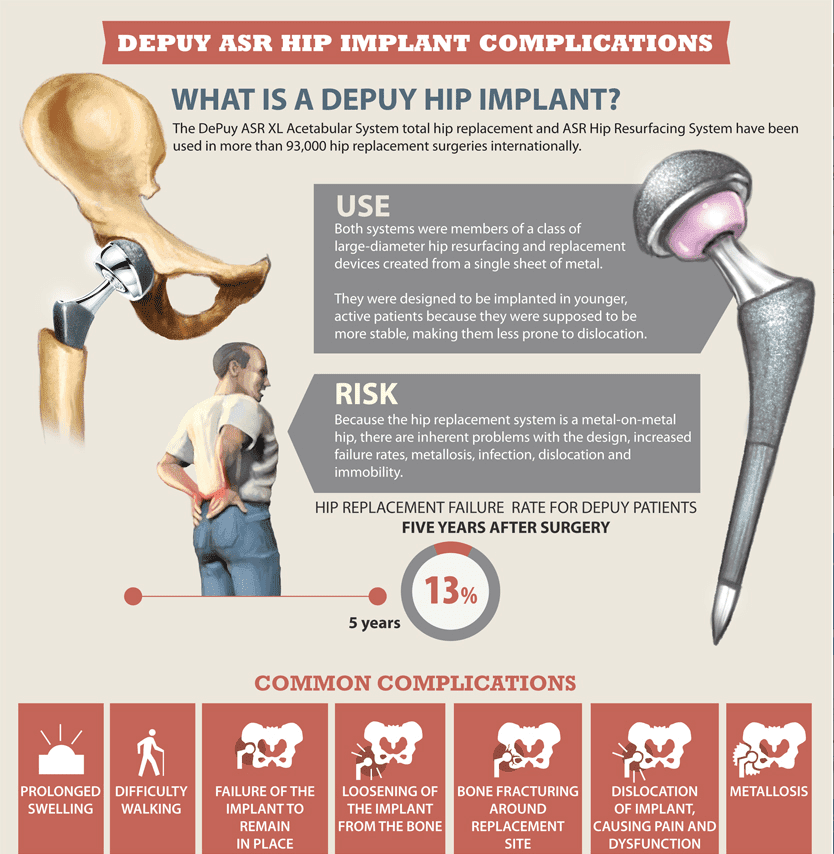
Below you will find more information about DePuy and its ASR hip implants, as well as details about the symptoms and complications associated with these defective devices. If you have received a hip implant and are experiencing ongoing pain, swelling, or reduced mobility, you may be suffering from hip replacement defects.
If you have had a hip implant and can identify with any of the symptoms of hip replacment defects listed on the infographic below, it’s time to call Pete at Lowe Law Group to learn more about your legal rights and to find out if you may qualify for compensation. The experienced attorneys at Lowe Law Group can guide you through the legal process, help you understand your rights, and evaluate whether you may be eligible for financial compensation.