

Understanding the Risks of Motorcycle Accidents
Motorcycle accidents and riding have grown increasingly popular across the United States, yet motorcyclists continue to face a heightened risk of serious injury or death on the road. A motorcycle accident generally refers to any collision or crash involving a motorcycle that results in property damage, injury, or death. These accidents often involve other motor vehicles, fixed objects, or roadway hazards, and they tend to result in more severe injuries than passenger vehicle crashes due to the lack of physical protection.
Although vehicle safety technology has advanced significantly over the past decade, these improvements have largely benefited passenger vehicles rather than motorcycles. Motorcycles lack protective features such as airbags, reinforced frames, and electronic stability controls, leaving riders particularly vulnerable in collisions. Common injuries from motorcycle accidents include traumatic brain injuries, spinal cord damage, internal organ injuries, fractures, and severe road rash. As a result, a motorcycle accident often leads to catastrophic injuries, long term disabilities, or fatalities.
Every ride carries inherent risks, including collisions with cars, trucks, or other motorcycles. Road hazards such as potholes, debris, uneven pavement, and wet surfaces can quickly become dangerous due to limited stability and protection. Negligence by other drivers causes approximately 66 percent of multi vehicle motorcycle accidents, with failure to yield the right of way, particularly during left hand turns, being the most common cause. Factors such as speeding, impaired driving, distracted motorists, and inadequate protective gear further increase the likelihood that a motorcycle accident will result in serious harm. Understanding these risks is essential for improving rider safety and preventing avoidable injuries and fatalities.
Now that the general risks associated with motorcycle accidents are clear, it is important to examine national crash trends and fatality statistics.
National Motorcycle Accident Statistics
Motorcycle accidents account for a disproportionate share of traffic fatalities nationwide. In 2023, there were 6,335 motorcycle fatalities, representing 15.5 percent of all traffic related deaths, even though motorcycles make up a much smaller percentage of registered vehicles. Motorcyclists are approximately 28 times more likely than passenger vehicle occupants to die in a motor vehicle crash.
As motorcycle ownership increases, so does overall exposure to risk. As of 2012, there were approximately 8.5 million motorcycle riders in the United States, and that number has continued to rise. Along with this increase, motorcycle fatalities have climbed by 7.1 percent since 2012. Roughly 60 out of every 100,000 registered motorcycles are involved in a fatal motorcycle wreck each year. These trends highlight the urgent need for effective safety education and public awareness.
With these national trends in mind, examining how motorcycle accidents affect riders at the state level provides additional insight.
Average Age of Motorcycle Wreck Victims in Utah
In Utah, the average age of riders killed in a motorcycle accident is 46.5 years old. This is particularly concerning because many riders in this age group are active, experienced, and confident in their riding abilities. Factors contributing to this trend include the increasing popularity of motorcycles, aggressive or reckless riding behaviors, and the limited protection motorcycles provide during collisions.
Understanding these statistics helps riders and their families prioritize safety measures and make informed decisions on the road. The data also underscores the importance of targeted safety education for riders in their forties and fifties, who may underestimate risk due to experience. Families and friends can also support safer outcomes by encouraging consistent helmet use and responsible riding habits.
Helmet use remains one of the most important factors influencing injury severity in motorcycle accidents.
Helmet Use and Injury Severity
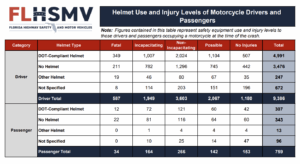
Florida Highway Patrol data shows a clear relationship between helmet use and injury severity among motorcycle operators involved in a crash. Riders who were not wearing helmets accounted for 38 of the 51 total fatalities and 226 of the 307 incapacitating injuries, while representing approximately 65 percent of all reported cases. In contrast, riders wearing DOT compliant helmets experienced substantially fewer fatal injuries, with only 7 reported deaths, and fewer incapacitating injuries, with 38 cases.
Helmeted riders were also more likely to sustain non incapacitating or no injuries. Overall, the data indicates that the use of DOT compliant helmets is associated with a significantly reduced risk of severe injury or death in motorcycle crashes.
In addition to helmet use, riders can take several practical steps to reduce their crash risk.
Tips to Reduce Your Risk of a Motorcycle Crash
Riders can take practical steps to lower the chance of a serious motorcycle wreck:
- Wear high-quality protective gear: DOT-approved helmets, jackets, gloves, and boots designed for motorcycling drastically reduce injury severity.
- Take a certified motorcycle safety course: These courses improve riding skills and teach defensive driving techniques.
- Avoid risky riding behaviors: Speeding, weaving through traffic, and alcohol consumption are leading contributors to accidents.
- Stay visible: Use reflective clothing, keep your headlights on, and maintain a safe distance from other vehicles.
- Maintain your motorcycle: Regular maintenance ensures brakes, tires, lights, and other essential components function properly. Mechanical failure can be as dangerous as driver error.
- Plan routes carefully: Avoid roads with high traffic, poor lighting, or known hazards, and ride during optimal weather conditions.
For additional safety tips, visit Motorcycle Safety Foundation.
Florida Highway Patrol data shows a clear relationship between helmet use and injury severity among motorcycle operators involved in a crash. Riders who were not wearing helmets accounted for 211 of the 587 total fatalities and 782 of the 1,949 incapacitating injuries. In contrast, riders wearing DOT-compliant helmets accounted for 349 fatalities and 1,007 incapacitating injuries but also experienced substantially higher numbers of non-incapacitating injuries and no-injury outcomes. Overall, the data indicate that the use of DOT-compliant helmets is associated with a reduced risk of severe injury or death in motorcycle crashes.
Motorcycle crashes remain a serious threat due to the inherent vulnerabilities of two-wheeled vehicles. Understanding the statistics, practicing defensive riding, maintaining your bike, and investing in protective gear are essential for any rider to prevent fatal crashes. By staying informed, cautious, and proactive, motorcyclists can enjoy the thrill of the ride while minimizing the risk of fatal accidents. Riders who combine education, preparation, and safe habits not only protect themselves but also contribute to a safer road environment for everyone.